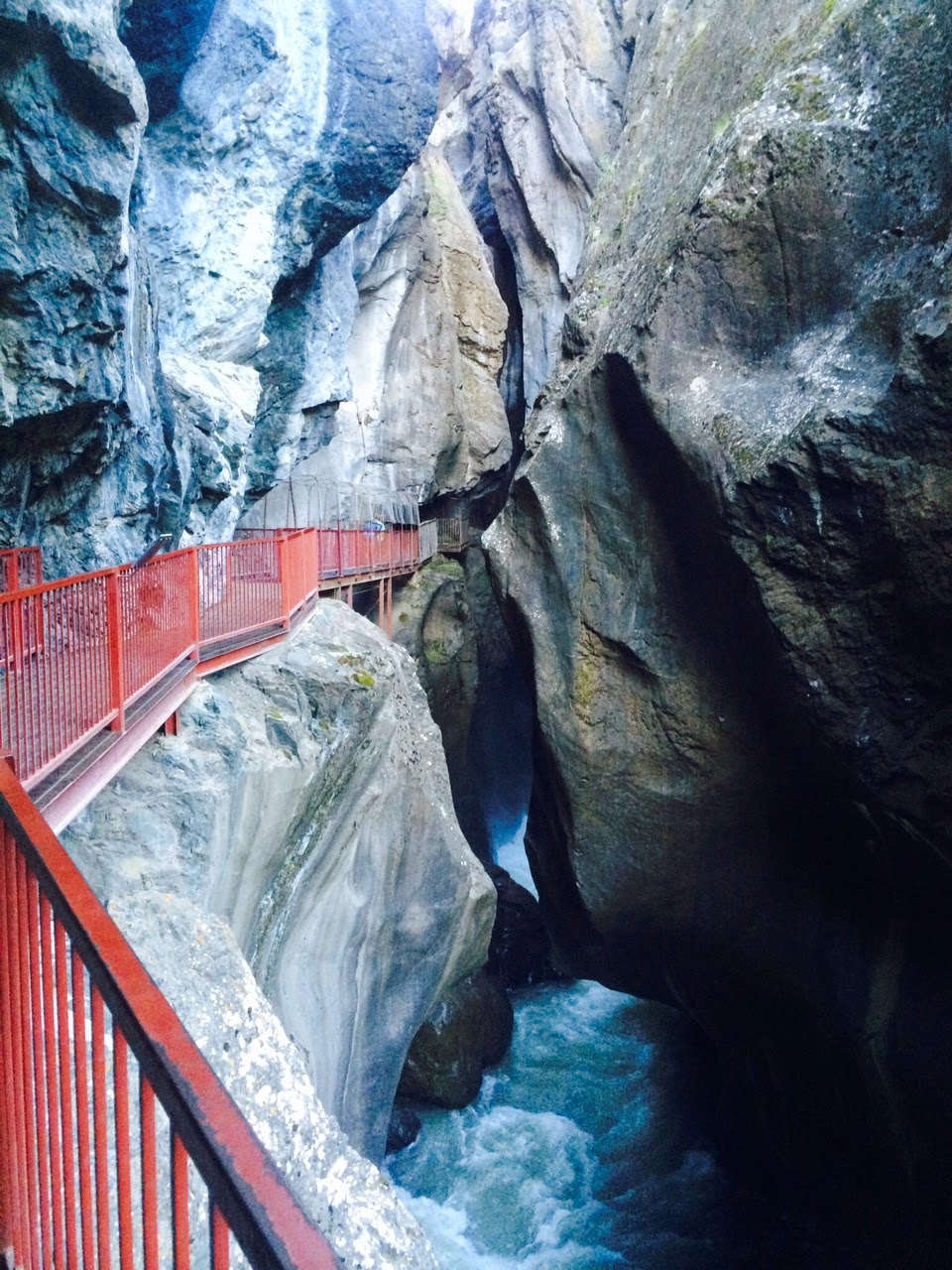
The biggest highlight of today was the Pizza Hut lunch buffet in town. The dude attending to the patrons kept trying to take my plate away. I had to growl at him like a dog when he tried this. I consumed approximately 1.5 pizzas, biked home, and fell asleep. Prior to this I did look for Willow flycatcher down the road a bit without success.

Since I know at least a few people will ask (and I don't real have much bird material today), I'll give you a not-so-quick-but-hopefully-informative overview of what I did for my PhD. I have always been interested in development. Very generally, developmental biology is the study of the events through which organisms grow and propagate themselves into subsequent generations. In more specific terms, development is the collection of genetic, cellular, and morphogenetic processes that control the specification of different cell and tissue types and the subsequent organization of these cell and tissue types into functioning and reproducing organisms. For example, there is much prenatal development between the time that an egg and a sperm unite to form a single-celled zygote and the birth of a baby 9 months later. There is subsequent and prolonged postnatal development that continues at least through the onset of the reproductive stages in this next generation. It would be impossible for any one person or laboratory to study every aspect of development, so each group of developmental biologists has its own little niche in which to study the very complex and beautiful process by which organisms take form, grow, and reproduce.
Clearly, the end goal of all of this research is to help humans in one capacity or another. However, it is difficult if not impossible to do experiments on people, so scientists instead rely on model systems to study development (and almost all other aspects of biology as well). Below is the life cycle of a human and of the model system in which I worked, the nematode C. elegans. While the body plans and the generation times are clearly very different, many of the core features of development have been conserved across evolutionary time from nematodes to humans. By studying what genes and proteins are required for the development of an organism as seemingly simple as nematode, we can actually glean quite a bit about how analogous developmental events might be regulated and executed in humans. The human genome contains about 20,000 genes. The worm genome also has about 20,000 genes, and about 35% of these are evolutionarily conserved with humans. Despite what they teach in some schools these days, you're more like a nematode than you ever realized!
Generation time ~15 years, generally 1 offspring per cycle
Personal note: humans should NOT NOT NOT chose
to reproduce this fast!

Generation time of 2.5 days.
1 adult worm lays ~250 eggs over 3 days.
By the time the last egg is layed, the first egg has
developed into a adult worm which itself s now laying eggs!

45 second, time lapse movie showing the ~14 hours
of embryonic development in C. elegans.
The animal hatches as a larvae after these 14 hours.
Gastrulation proper starts about at about an hour into
the clip and runs until hours 5-6.
Time stamp in top left is hours:minutes:seconds.
SO AWESOME!!! So how did I fit into this? I specifically worked on the molecular control of gastrulation in C. elegans. Embryos generally have 3 germ layers layers: endoderm, mesoderm, and ectoderm. Endoderm will become most of your internal organs. Mesoderm will generally form muscles and bones. Ectoderm will contribute to your nervous and skin systems. Nematodes don't have bones, but they do have everything else I listed above. These 3 germ layers are organized during a massive embryonic movement of cells called gastrualtion. This organization of these germ layers is what is happening in the movie above. After they are correctly organized, the further morphogenetic articulation produces what you will recognize as a long, skinny, worm shaped body. I specifically studied what genes were required for the the very early stages of gastrulation. I explored how cells sense their physical positions relative to other cells and how they know where to move once this embryonic reorganization commences. Much of my work centered on cell polarity. This is the process by which cells asymmetrically partition function across their cell bodies. Think of it this way, a cell moving in a gastrulating embryo is moving in a given direction. Therefore, that cell must have somehow delineated or marked that axis along which it is moving; There is a vector and a polarity associated with this movement. I was able to identify a previously uncharacterized molecule that polarizes embryonic cells so that they can move in the right direction once the embryo starts reorganizing itself during gastrulation. For those that want the genetic and molecular specifics, here you go.
Anyway, I write this as a bit of personal pride and also as a bit of personal practice. One thing that I think I do well is communicate seemingly complex ideas in a way that people not immediately familiar with them can grasp and find interesting. While I doubt that I will return to the laboratory, I would like somehow to be involved as an advocate for science and other forms of rational thought. I may find that the best way to do this is as a high school science teacher, I may try to get involved in science writing, or maybe, just maybe, I can get elected to Congress so that we actually have a PhD level scientist making important scientific decisions moving forward. Somebody correct me if I am wrong, but I do not think any of these people have a PhD in anything even remotely connected to science. Its absolutely terrifying! Anyway, these are just some of the things I think about as I bike what sometimes seem like endless miles around the country. I have the feeling that I will figure it all out eventually.......
Quick trivia question: We've had one president with a PhD. Who?
I'd personally like to see more......
Lastly, Queen Sonia got to do something SUPER COOL today. If you're not a baseball/sports fan this won't mean much, but if you are, the photos will require zero explanation. I'm very jealous!
HINT: there is ivy on the outfield wall!